On the seafront, uPVC is usually the worry-free option because the frame doesn’t corrode. Thermally broken aluminium works well if the coating and hardware are designed for a marine environment, and it’s the best answer for large openings. Timber is chosen for protected facades or for its looks, and it needs regular maintenance. Whatever the material, the first things salt air attacks are the hardware and screws. As a guide, windows and doors with a thermal break start from €380/m² of opening, installed, excluding tax.
Replacing your windows is one of the few renovations you notice the same day: in the noise, the temperature and your electricity bill. But on an island with salt air and wind, what decides whether they still open and close properly in a few years isn’t the price of the frame. It’s getting the material right, along with the details you won’t see in the brochure. This guide helps you compare before you ask for a quote.
What salt air does to a window
Salt air doesn’t usually finish a window off through the frame, but through its moving parts. It attacks the hardware and screws, and the wrong windows on the seafront start to stick and jam within a few years: the opening panels rub, they’re hard to move or the catch stops closing properly.
That’s why it isn’t enough to ask which material won’t rust. A uPVC frame doesn’t corrode, but its hardware is still metal. And salt air doesn’t stop at the first row of buildings: with the wind it travels further inland, so in any home exposed to the sea it’s worth asking about the hardware, even if the window isn’t right by the beach.
The three materials side by side
| Material | Against salt air | Best feature | Watch out for | Relative price |
|---|---|---|---|---|
| uPVC | The frame doesn’t corrode | Thermal and acoustic performance for the price | Thicker frame; hardware | Middle of the range |
| Thermally broken aluminium | Good with marine-grade coating and hardware | Slim frame, copes with large openings | Hardware and coating quality | Mid to upper range |
| Timber | Doesn’t rust, but sun and damp wear the finish | Required on many protected facades | Regular maintenance | Top of the range |
Away from the coast, choosing between uPVC and aluminium is more a question of design and budget than a technical one. The price references and what the work includes are on our page on windows and doors in Tenerife.
uPVC with a thermal break?
Lots of people search for “uPVC windows with a thermal break”, and the term is worth clearing up because it will appear on your quotes. A thermal break (rotura de puente térmico, RPT) is an insulating barrier that separates the inner and outer faces of a metal profile. Aluminium conducts heat very well and, without that barrier, the frame lets it through and takes on the outside temperature.
uPVC doesn’t have that problem: it conducts very little heat and insulates through the material itself and the chambers inside the profile. So there’s no need to look for a thermal break in a uPVC window. What you should compare, whatever the material, is the insulation of the complete window, glass included: ask the manufacturer for the thermal transmittance figure (Uw) and the watertightness and air-permeability ratings.
A general word of warning about uPVC: it expands with heat more than aluminium does, and dark colours get hotter in the sun. If you want a dark finish on a large south- or west-facing opening, check first with the manufacturer that the profile and size are suitable.
Aluminium near the sea: what to insist on
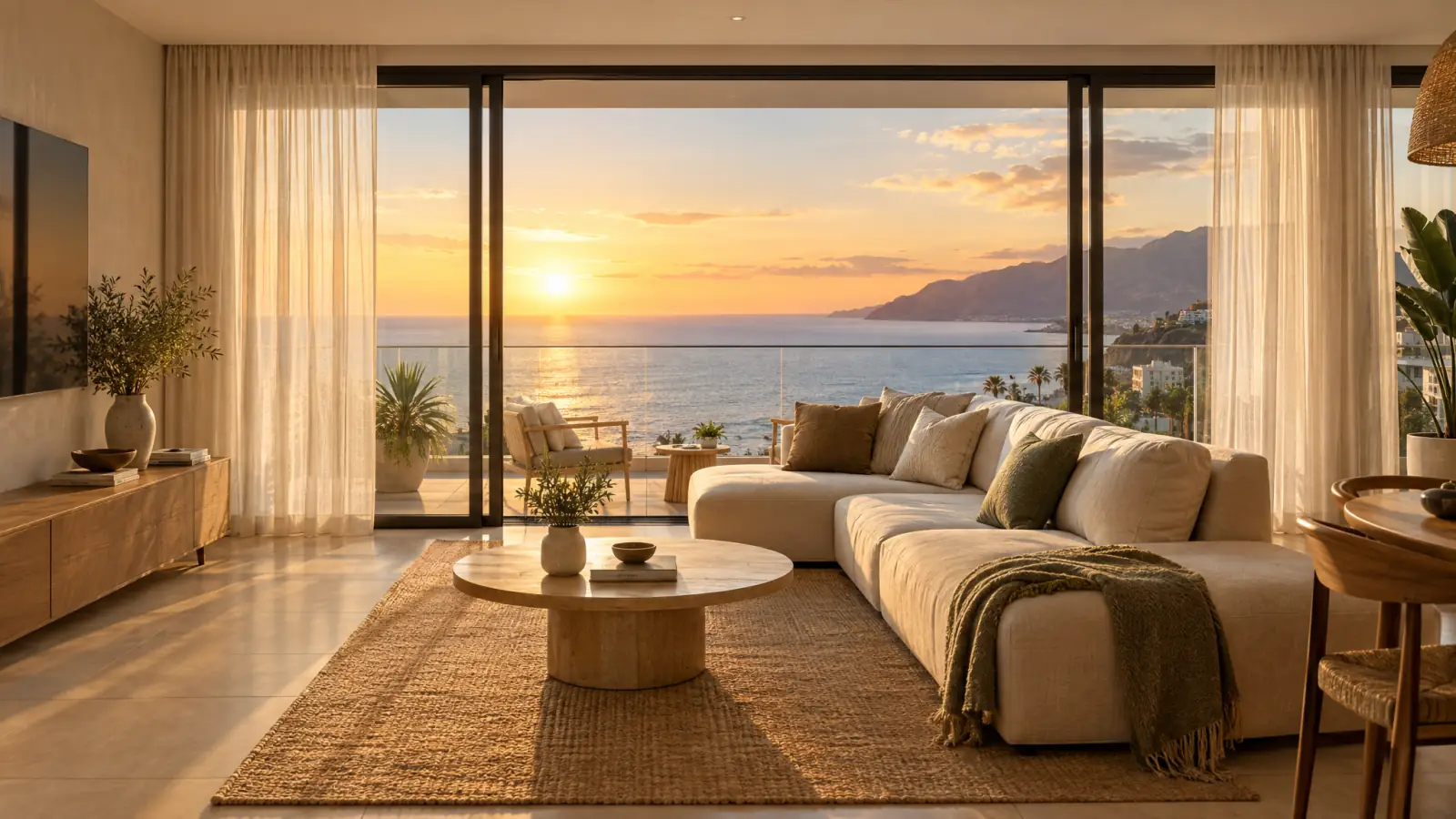
Aluminium is a great solution for picture windows with sea views, because its slim frame copes with large openings. But on the coast you need to ask for more than “thermally broken aluminium”:
- Hardware suitable for a marine environment. This matters most: with standard hardware, the mechanisms seize up within a few years. Ask what it’s made of and whether the guarantee covers use by the sea.
- A coating designed for the coast. In a marine environment, filiform corrosion can appear: fine threads that creep under the paint. The Qualicoat quality label has a specific endorsement, Seaside, which requires enhanced pretreatment of the aluminium. Ask whether the coating has it.
- How it opens. On an exposed facade, wherever the layout allows, a side-hung or tilt-and-turn window is a safer bet than a cheap sliding one.
- Perimeter sealing and trims done properly, inside and out: that’s where the insulation is lost if the job is rushed.
When timber makes sense
Timber doesn’t rust, but sun and damp are hard on its finish, so it needs regular maintenance that you have to be prepared to carry out, all the more so on an exposed facade. Its hardware isn’t spared from salt air either. It’s the option at the top of the price range.
That said, in many cases it isn’t a choice: it’s required on many protected facades. In historic centres such as La Laguna, La Orotava, Icod or Garachico there may be conditions on the material, colour and pane layout of windows visible from the street, and swapping timber for aluminium lightly isn’t allowed in many cases.
Depending on where your home is
- On the seafront (Los Cristianos, Las Américas, Puerto de la Cruz, Radazul, Los Gigantes): salt air is the deciding factor. uPVC, or aluminium with hardware and coating designed for a marine environment.
- Northern midlands (the mid-altitude slopes): the problem is persistent damp and condensation. The best insulator wins, and the difference between double glazing and single glazing shows in the mould stains around the frames.
- South- and west-facing sides: with strong sun almost all year round, the glass matters more than the frame. Solar control glazing noticeably reduces overheating and cuts air-conditioning use.
- Protected historic centre: the choice isn’t yours alone, and it’s resolved before manufacturing, not after.
A warning for damp homes: new windows seal the house, and the vapour that used to escape through the gaps stays inside. If you already have condensation, the ventilation has to be sorted out too; we tackle it together with the building envelope in an energy retrofit.
Community and permit, before anything is made
If you keep the opening and don’t alter the outward appearance, a prior notification (comunicación previa) or a minor works permit (obra menor) is usually enough. If you change the size, colour or material in a way that alters the look of the facade, or you’re in a protected historic centre, the procedure is more demanding; we explain it in our guide to building permits in Tenerife.
In 1970s buildings and in complexes in the south, it’s also common for the community of owners to have an agreement on the colour and type of windows visible from outside. Check with the property manager before ordering: having to redo a window for breaking that rule is an avoidable expense.
How to make them last
General advice for any window exposed to the sea. Your manufacturer’s instructions come first:
- Rinse and clean the frames and glass with water and a mild product, nothing abrasive, to remove the built-up salt.
- Keep the tracks and drainage holes clear. If they block, water can’t get out and dirt slows the panels down.
- Check and lubricate the hardware with the product the manufacturer recommends, and don’t wait until the window becomes hard to move.
- Keep an eye on the perimeter seal: if it cracks, water can get in.
If you can already see condensation between the two panes, feel a draught with the window closed, hear the street clearly or mould keeps coming back around the frame, your windows are no longer up to the job.
What the quote should include
The price is given per square metre of opening and the range is wide. Windows and doors with a thermal break start from €380/m² installed, glazed and sealed; from there it depends on the material, how they open, the glazing and whether the opening needs rebuilding. To compare offers properly, ask for all of this in writing:
- On-site measurement, opening by opening, not from drawings.
- The specific material and profile, with the insulation of the complete window.
- The hardware and whether it’s suitable for a marine environment.
- The coating, if it’s aluminium.
- The glazing: double or triple, low-emissivity or solar control depending on orientation.
- How each window opens.
- Removal of the old windows and waste disposal.
- Perimeter sealing and trims, inside and out.
- Roller shutters, insect screens and locks, if they’re part of the project.
- IGIC itemised, because the Canary Islands don’t charge VAT.
- What’s left out: building work if the size of the opening changes, or painting the room, for example.
Allow for the timing: installation for a whole home takes two or three days, but manufacturing takes four to eight weeks. If you’d like us to take a look, ask for your quote: we measure each opening and tell you which material makes sense on your facade. All the details of the service are on our page on windows and doors in Tenerife.
Frequently asked questions
How much does it cost to replace windows near the sea in Tenerife?
Windows and doors with a thermal break start from €380/m² of opening, installed, glazed and sealed, excluding tax: the Canary Islands charge IGIC (their own indirect tax) instead of VAT, itemised on the quote. The total depends on the square metres of openings, the material and the glazing, and one material can cost twice as much as another for the same opening. We measure each opening at the site visit and the quote is fixed-price.
Do uPVC windows have a thermal break?
Strictly speaking, they don’t need one: a thermal break is a barrier built into metal profiles because metal conducts heat so well. uPVC conducts very little and insulates through the material itself and the chambers in the profile. When someone asks for “uPVC with a thermal break”, what they’re really asking for is a well-insulated window, and that’s what you should compare.
How long does it take to replace the windows?
Installation for a whole home takes two or three days. What sets the timeframe is manufacturing, which takes four to eight weeks depending on the material and the manufacturer. If the windows are part of a full renovation, they’re the first thing measured and ordered.
Can you fit aluminium windows on the seafront?
Yes, if the coating and, above all, the hardware are designed for a marine environment. With standard hardware, the mechanisms start to seize up within a few years. It pays off most on large openings, where aluminium’s slim frame has the advantage.
Do I need a permit to replace the windows?
If you keep the opening and don’t alter the outward appearance of the building, a prior notification (comunicación previa) or a minor works permit (obra menor) is usually enough. If you change the size, colour or material in a way that alters the look of the facade, or you’re in a protected historic centre, the procedure is more demanding. We check this before anything is made.