
Renovations in La Laguna
La Laguna’s historic centre has been on UNESCO’s World Heritage List since 1999, and that listing isn’t a tourist label: it translates into specific conditions on what you can do to a facade, a window or a roof. Outside that boundary the municipality is something else entirely (developer-built blocks in La Cuesta and Taco, detached houses in the midlands, coastal homes in Bajamar and Punta del Hidalgo), and a renovation follows completely different rules depending on which side of that line your home is on.
Most requested renovation services in San Cristóbal de La Laguna

How renovations are done in San Cristóbal de La Laguna
Renovating inside the historic centre
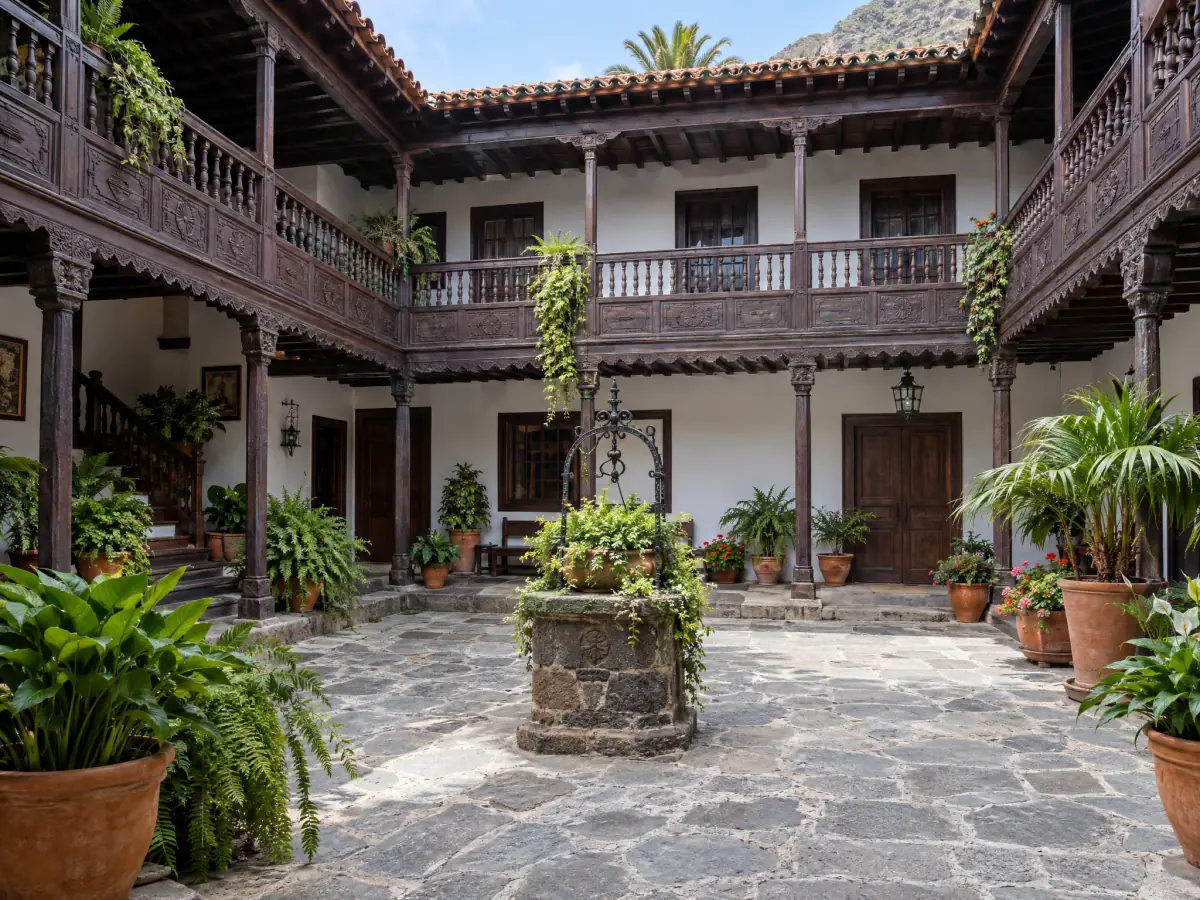
The traditional house in La Laguna’s old town follows the same pattern: two storeys, an inner courtyard, very thick walls of rubble and mud, openings framed in dressed stone, floors and roof in tea (the resinous heartwood of the Canary pine) with curved clay tiles (teja árabe) on top. That pattern is exactly what the protection sets out to preserve, so the facade, the volume, the number of storeys, the position and proportion of the openings, and the colour and material of the windows and doors aren’t free choices for the owner. There’s a heritage catalogue with different levels of protection: a building with full protection isn’t the same as one with environmental protection, where the interior allows much more freedom than the outer skin.
In practice this means that here you don’t swap a timber window for a white PVC one because it’s cheaper, hang an air-conditioning unit on the facade or replace the clay tiles with some other solution just like that. When the building is in the catalogue, the work also needs a report from the heritage department before the town hall decides, and that means writing up and documenting the proposal more thoroughly than you’d be used to in an ordinary renovation. We take that on as part of the job: it’s designed with an architect or engineer, justified and submitted, and only then does anyone start work.
The upside is that these houses have a lot of potential inside if you read them properly. Bringing the courtyard back as a source of light, leaving the tea exposed where it’s sound, keeping the stonework and running new services along routes that don’t wreck the historic walls are the decisions that make the house work today without fighting what it is.
Damp on the plain: condensation, timber and thick walls
La Laguna sits quite high up on a flat plain (the vega) hemmed in by hills, which gives it a climate of its own within the metropolitan area: cooler, with high relative humidity for much of the year and the low cloud everyone here knows. For a renovation the effect is very specific. Condensation appears in cold corners and on north-facing walls, mould appears behind wardrobes pushed against the wall, and rising damp appears at the base of old walls, which were built without any barrier against moisture from the ground.
The answer that works isn’t to seal the house up, quite the opposite: let the thick walls breathe, use vapour-permeable mortars and paints instead of cements and plastics that trap water inside, deal properly with bathroom and kitchen ventilation, and treat the tea timber against wood-boring insects before covering anything up. In the old town, when you can’t touch the facade, thermal and acoustic improvements have to be made from the inside and through the windows: there are now timber windows with insulated glazing that meet the rules without betraying the look of the opening.
In houses in the midlands and the upper districts the problem is the same even when the building is modern: north-facing walls that never dry out and windows that drip on the inside. There, the solution usually lies in ventilation and windows before any heavy building work.
The other La Laguna: La Cuesta, Taco, the midlands and the coast
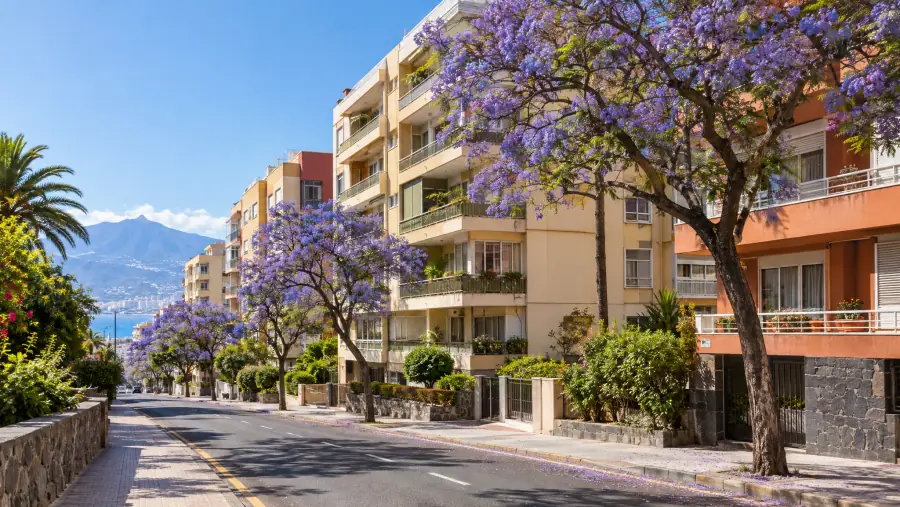
Outside the old town the municipality is huge and very varied. In La Cuesta, Taco and Los Majuelos the developer-built block from the seventies and eighties dominates, with the same problems as in Santa Cruz (worn-out services, shared soil stacks, windows with no thermal break) and no heritage restrictions at all: renovation there is straightforward. In Geneto, El Ortigal and Guamasa there are many detached houses from the eighties and nineties, often extended in stages, where what we usually find are badly waterproofed flat roofs and extensions that were never legalised at the time.
And then there’s the coast. Bajamar and Punta del Hidalgo take the sea head-on on the north side: there, salt air and wind eat away at fittings, railings and fixings, and materials have to be chosen with that in mind from the start, not once they’ve already rusted. In Tejina and Valle de Guerra the profile is more agricultural, with single-storey houses and farm plots where the renovation includes annexes, outbuildings and stores.
Building permits in San Cristóbal de La Laguna
- Prior notification
- Minor works
- Major works with project
In La Laguna you have to separate two scenarios. Outside the historic ensemble, the procedure follows the usual logic: works that don’t affect structure, layout or outside appearance usually go through a prior notification (comunicación previa) or self-declaration (declaración responsable), and those that do need a permit with a technical project and site supervision.
Inside the protected historic ensemble (conjunto histórico), that logic changes. Jobs that elsewhere would be minor (changing windows, painting the facade, replacing roof tiles, putting up a sign or an exposed installation) stop being trivial because they affect a protected asset, and may need a prior heritage report as well as the council permit. How demanding it is depends on the level of protection your building has in its catalogue entry, and that’s the first thing we check before proposing anything.
We won’t give you a fee figure or a timeframe in days for either case, because they aren’t figures we can guarantee. What we will tell you, in writing, is what paperwork is needed, who has to sign it and whether your job is one that shouldn’t start until the application has been decided. We do that part of the work; the works themselves are then carried out by the trades we coordinate.
We don’t publish fee amounts or specific administrative timeframes, because they change with each bylaw and an out-of-date figure is worse than none. We check them on the town hall’s online portal (sede electrónica) before giving you a start date. You will find the general framework in the guide to building permits in Tenerife.
Parts of San Cristóbal de La Laguna where we work
We cover the historic centre and its immediate surroundings (the Cathedral area, La Concepción, San Agustín and Calle Herradores), the districts of La Cuesta, Taco, Los Majuelos, Finca España, El Cardonal, Las Chumberas and La Verdellada, the midlands of Geneto, El Ortigal, San Miguel de Geneto, Las Mercedes and Guamasa, and the municipality’s whole coastline: Bajamar, Punta del Hidalgo, Tejina, Valle de Guerra and Los Rodeos.
Specific guides for San Cristóbal de La Laguna
Frequently asked questions about renovating in San Cristóbal de La Laguna
The questions we are asked most often on site visits. If yours is not here, ask us directly.
Can I fit PVC or aluminium windows in a house in the old town?
It depends on the building’s level of protection and on whether the window can be seen from the street. On protected facades the usual requirement is timber, with the same divisions and proportions as the original opening, and there’s room to fit insulated glazing within that frame. In inner courtyards and areas that can’t be seen there’s usually more flexibility. We check the catalogue entry before quoting, not after.
Can a tea-pine timber floor be worked on?
It can, but with care. The first thing is to see the real condition of the beam ends where they go into the wall, which is exactly where timber rots without anything showing from below. From there, the options range from treatment and local strengthening to replacing specific pieces. In listed buildings, replacing the whole floor is rarely a free choice and needs technical justification.
I have damp and mould all year round on the north-facing walls. Can it be fixed?
Yes, but the diagnosis has to be right. In La Laguna most of these cases are condensation, not water getting in: humid air, cold surfaces and poor ventilation. It’s corrected by combining ventilation, insulation on the inside where possible and airtight windows with a thermal break. If it’s rising damp from the ground, the solution is different and involves letting the base of the wall breathe.
I live in La Cuesta. Do the old town restrictions affect me?
No. The historic ensemble’s conditions apply to the protected area and its defined surroundings. In La Cuesta, Taco, Los Majuelos or Finca España you renovate under the municipality’s general planning rules, just as in any other district of the metropolitan area.
Neighbouring municipalities
We also work in Santa Cruz de Tenerife, Tegueste and Tacoronte, and in the rest of the metropolitan area.
Renovations in Santa Cruz de Tenerife
View the municipality
Renovations in Tacoronte
View the municipality
Metropolitan area
All municipalities in the area
View the areaPage last reviewed: 14 August 2026.

See what yours costs in San Cristóbal de La Laguna
Choose what you want to do, the finishes and the style, and the planner gives you the guide price, the timeline and the permit. No details needed.
Plan my renovationStarts with your municipality already selected

Renovating in San Cristóbal de La Laguna?
Tell us what you want to do. Free site visit and a fixed-price quote, itemised line by line.
- Free site visit anywhere on the island
- Fixed-price quote, itemised line by line
- Your details are not passed on to third parties
Prefer to talk? +34 822 263 441
Shall we put a price on your renovation?
Tell us what you want to do and where on the island. We call you, visit the property and send you a fixed-price quote, itemised line by line. No cost and no commitment.