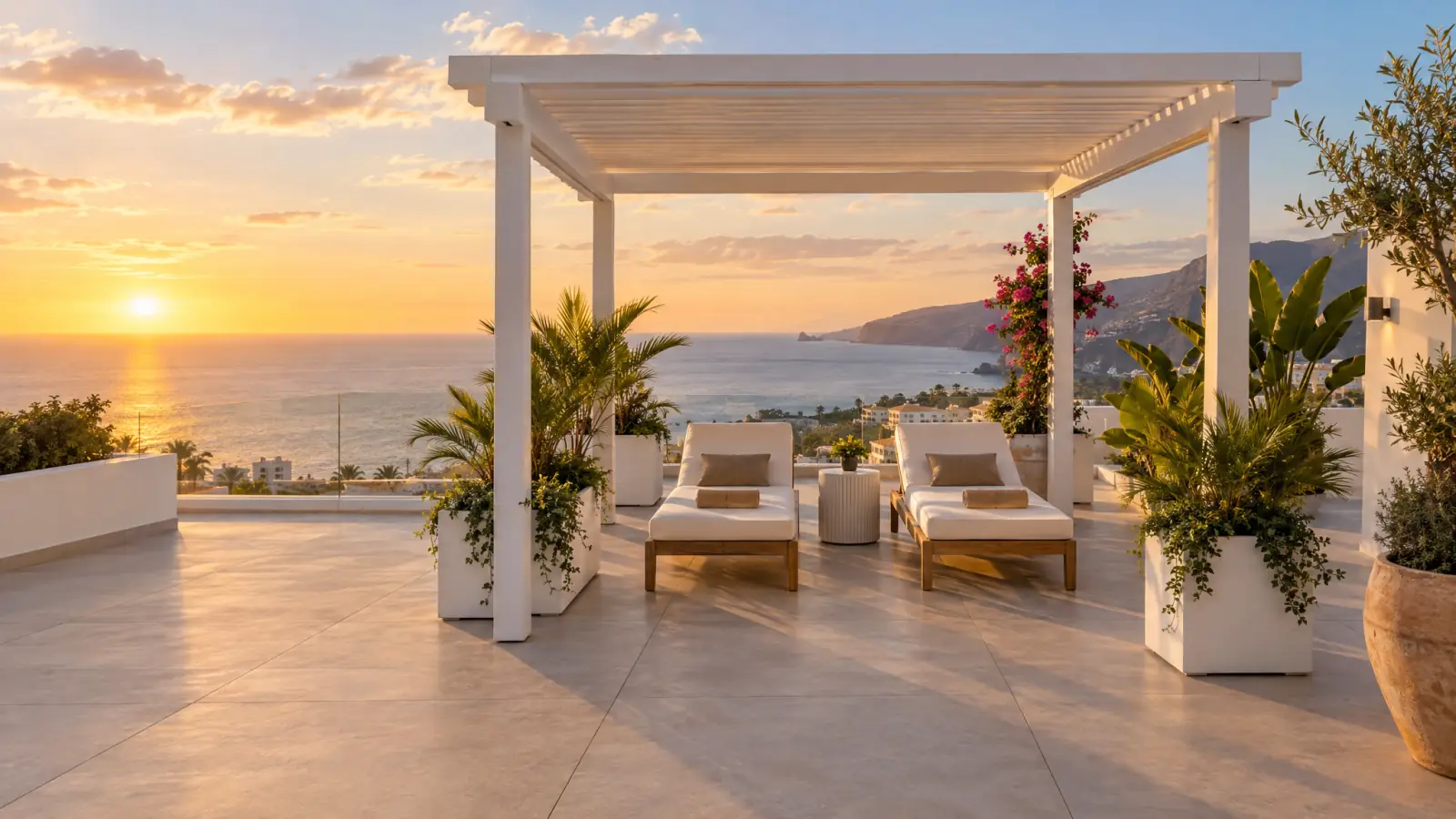
Terrace and roof terrace renovation in Tenerife
In Tenerife the terrace is used all year round, which means it takes direct sun, salt air and heavy rain concentrated into a few days. Most terrace renovations that go wrong share the same cause: the floor was replaced without fixing what was underneath. Here we explain the right order.
Free site visit and quote anywhere on the island. Reply within 24 working hours, in English.
A terrace is renovated from the bottom up, in this order: waterproofing, falls, drains and only then the flooring. Laying a new floor over a worn-out membrane is throwing money away, because the damp will keep appearing on the ceiling of the neighbour below or in your own living room, and to fix it the new floor will have to come up.
The other half of the job lies in the junctions and finishing details: the parapet, the perimeter skirting, the threshold into the home and the drain. That’s where water gets in nine times out of ten, not through the middle of the floor. In coastal areas add salt air, which eats through fittings, railings and anchors in a few years if they aren’t made of the right material.
What this service includes
- Diagnosis of the current state. We check whether there’s damp below, how the terrace drains today, what condition the waterproofing is in and whether the falls take the water where they should.
- Demolition and removal of the existing floor. Including rubble disposal, which on a terrace at height is no minor detail.
- Waterproofing with the right solution for the case. Sheet membrane or liquid membrane depending on the substrate, the use and the junctions, with the reinforcement at perimeters and drains that almost nobody prices in and is always needed.
- Forming or correcting the falls. So water runs to the drain instead of pooling into puddles that end up leaking through.
- Non-slip outdoor flooring. Outdoor-rated porcelain tile, stoneware or a raised floor system, chosen bearing in mind that people will walk on it barefoot and that it will get wet.
- Railings, parapets and perimeter finishes. With materials and fixings designed for a marine environment if the terrace is near the coast.
- A water test before signing off. The surface is flooded or given prolonged watering and checked from below, which is the only serious way to verify that the work has been done properly.
What is NOT included
This list matters as much as the first one, and hardly anyone publishes it. Any of these items can be added to the quote: what we don’t want is for them to turn up halfway through the job as a surprise.
- Enclosing the terrace with glass or aluminium, which usually needs the community’s authorisation and its own permit, and is quoted as a separate job.
- Repairing the floor slab structure if rusted reinforcement or carbonated concrete turns up when the floor comes up: that requires a technical assessment and a separate quote.
- Awnings, pergolas and outdoor furniture, unless expressly included as a line item.
- Community works on shared roofs when the terrace is a communal element for private use, which depend on an agreement at the owners’ meeting.
- A new electrical installation for outdoor lighting if there’s no existing conduit, which is priced separately because chases have to be cut.
- Municipal fees for the permit or prior notification (comunicación previa), which are paid by the owner.
How much it costs in Tenerife
We don’t give a fixed price per square metre of terrace because most of the cost is below the floor and can’t be estimated without seeing it. What we do explain is how the quote is built up, line by line.
- We measure the actual terrace area and, separately, the linear metres of perimeter. The perimeter weighs far more than people expect, because the junctions are the sensitive points and they need reinforcing.
- We assess the state of the substrate. If the screed is sound and only needs waterproofing on top, that’s one job; if it has to be broken out down to the slab, a sizeable demolition and removal line item appears.
- We choose the waterproofing system for the case. Each solution has its price and its lifespan, and the cheapest is rarely the best value on a terrace that gets direct sun all year round.
- We decide on the flooring. As a documented benchmark, porcelain tile supplied and laid ranges from €40 to €90/m² depending on the format, the quality and how difficult it is to lay; outdoors you also have to insist on a non-slip rating.
- We add railings, parapets and finishes, which on the seafront change material and price because ordinary steel doesn’t last.
- We add the means of access. Carrying materials up and rubble down on a fourth-floor terrace without a suitable lift is a real line item, and we’d rather you saw it written down than hidden in the price per metre.
All of the above is a guide, subject to a site visit: with terraces this is especially true, because until an area is lifted nobody knows what’s underneath. In the Canary Islands IGIC, the local indirect tax, is charged instead of VAT, and it is shown separately on the quote.
Timeframes
2–4 weeks
A medium-sized terrace usually takes two to four weeks. Demolition and rubble removal go quickly; what sets the calendar is the curing time of mortars and waterproofing products, which has to be respected no matter what, because rushing it is exactly what makes the job fail. Rain also has its say: waterproofing never goes onto a damp substrate. If the terrace is the only way out of the home, we organise the phases so you can still get through.
How we work
We manage the works, and they are carried out by professional tradespeople from the island, chosen by us for each line item. We don’t have a crew on the payroll and would rather say so up front: you sign one contract, speak to one person and we answer for the whole job. We explain it plainly in about us.
- Site visitWe come to the property, measure up and check the plumbing and electrics. Free.
- Fixed-price quoteWithin 3–5 days: every line item with price, finishes and timeframe.
- Permit and scheduleWe handle the permit and line up the trades with no dead time.
- Supervised worksProgress updates with photos. Any change is approved before it is made.
- HandoverFinal walk-through with you and a closed snagging list.
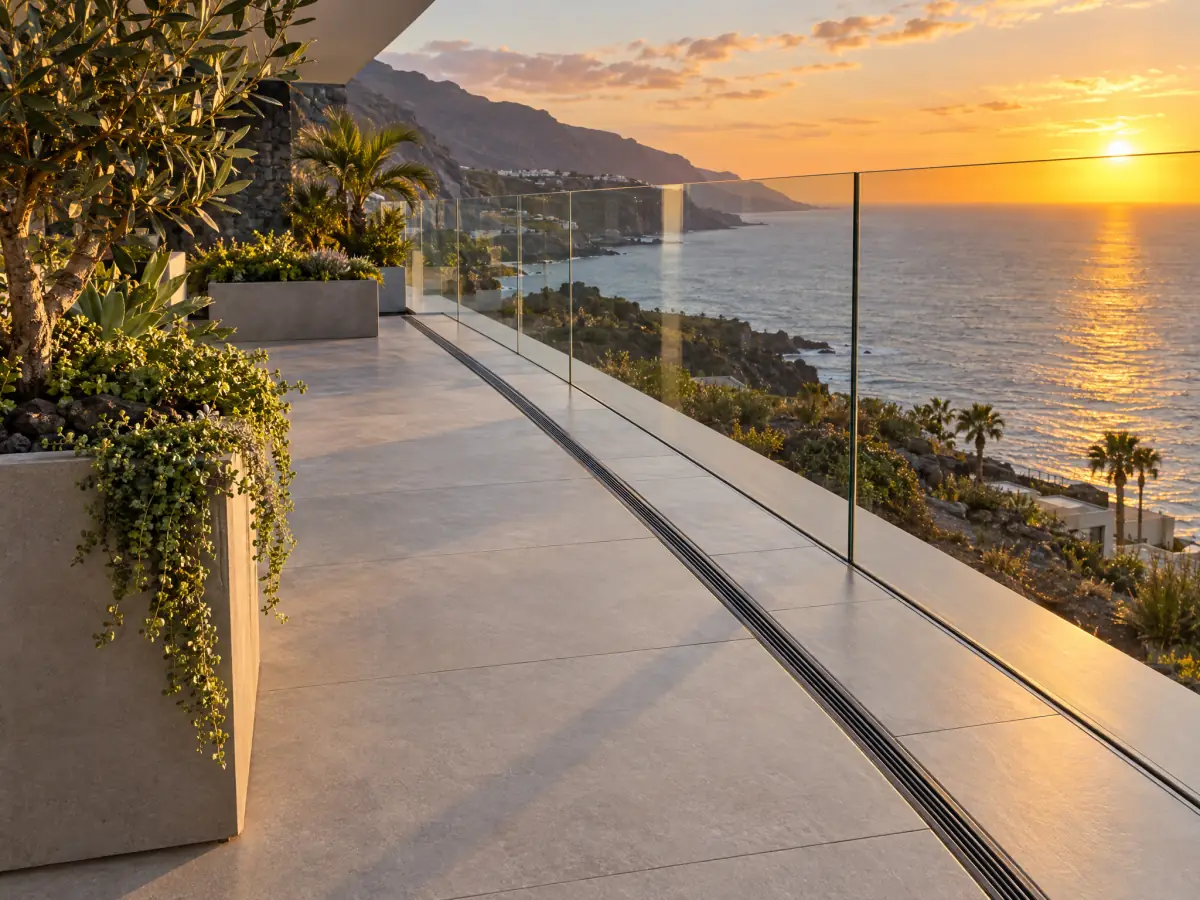
Why damp comes back after a terrace renovation
It’s the most common call we get about terraces: the floor was replaced two years ago and the stain on the ceiling below is back. The causes repeat themselves a lot.
- The new floor was laid straight over the old waterproofing, which had already reached the end of its life.
- The junctions with the parapet and the threshold into the home weren’t reinforced, which is where water gets in when rain comes with wind.
- The drain ended up higher than the floor surface, so water pools instead of draining away.
- The falls were set by eye and there are spots where water sits for days after it rains.
- A perimeter skirting was stuck on without taking the waterproofing up behind it, so the joint ends up being the way in.
Roof terraces and heavily used flat roofs
A roof terrace or solarium gets direct sun practically all year round, which puts the materials through harsh thermal cycles. The flooring expands, the joints move and any badly finished system ends up giving way at its weakest point. That’s why walkable flat roofs need proper expansion joints and materials that don’t build up heat too fierce to walk on barefoot.
If there’s also equipment up there, such as air-conditioning units or solar panels, their supports have to be solved without puncturing the waterproofing. It’s a small detail that ruins whole terraces when it’s done badly, and it’s easy to get right if it’s thought through before starting.
Where we offer this service
Across the whole island of Tenerife. Our office is in Arona, and we work in all four areas: the metropolitan area, the north, the south and the Güímar Valley. The site visit is free in every municipality.
Frequently asked questions
The questions we are asked most often on site visits. If yours is not here, ask us directly.
Can I lay the new floor over the old one and save on demolition?
Sometimes you can, and sometimes it’s a bad idea dressed up as a saving. It’s possible if the waterproofing underneath is sound, if the resulting level doesn’t rise above the door threshold and if the slab can take the extra weight. We check it on the site visit. When those conditions aren’t met, we say so, even if the job ends up costing more.
Which flooring best withstands sun and salt air?
Outdoor porcelain tile with a non-slip rating is the most balanced option: it copes well with sun, doesn’t stain easily and cleans up without fuss. Natural wood needs constant maintenance on the seafront, and dark stone builds up heat that makes the terrace unusable at midday in summer. We talk all this through before you choose.
Do I need a permit to renovate my terrace?
Replacing the floor and waterproofing is usually covered by a prior notification (comunicación previa) or a minor works permit (obra menor), depending on the municipality. Things change if you’re going to enclose the terrace, alter the parapet, change the facade or touch the structure: then it’s a different kind of application. We check with your town hall before submitting anything.
What if the terrace belongs to the community but I’m the one who uses it?
It’s a very common case on the island, especially with roofs reserved for one owner’s private use. Normally the upkeep of the communal element falls to the community and the maintenance that comes with using it falls to the owner, but it depends on the specific bylaws. Before starting it’s worth clarifying this in writing with the community, and we’ll help you raise it.
How do I know the waterproofing has been done properly?
With a water test before the flooring goes down. The surface is kept under water for hours and checked from below. It’s a step many quotes leave out and we include, because it’s the only way to catch a failure while it can still be fixed without lifting the new floor.
Related services
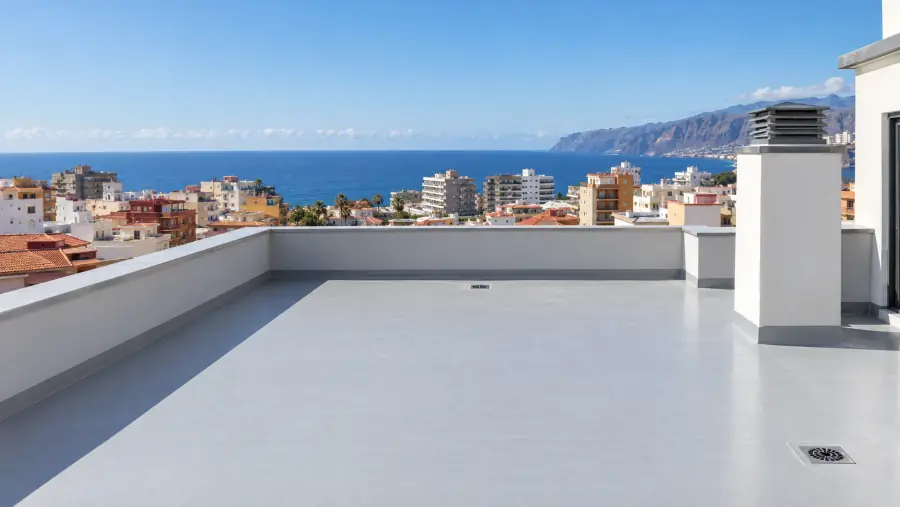
Roof and flat roof waterproofing
Roof waterproofing in Tenerife: we find where the leak really comes from before quoting, and repair to suit the roof. We speak English.
View the service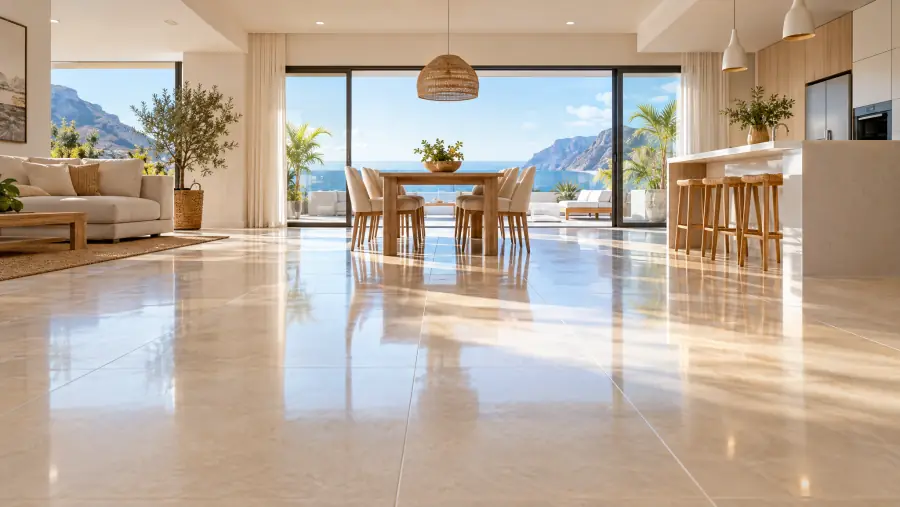
Flooring installation
Replacing floors in Tenerife: porcelain tile laid from €40 to €90/m². When it can go over the old floor, which material to choose and how it’s quoted.
View the service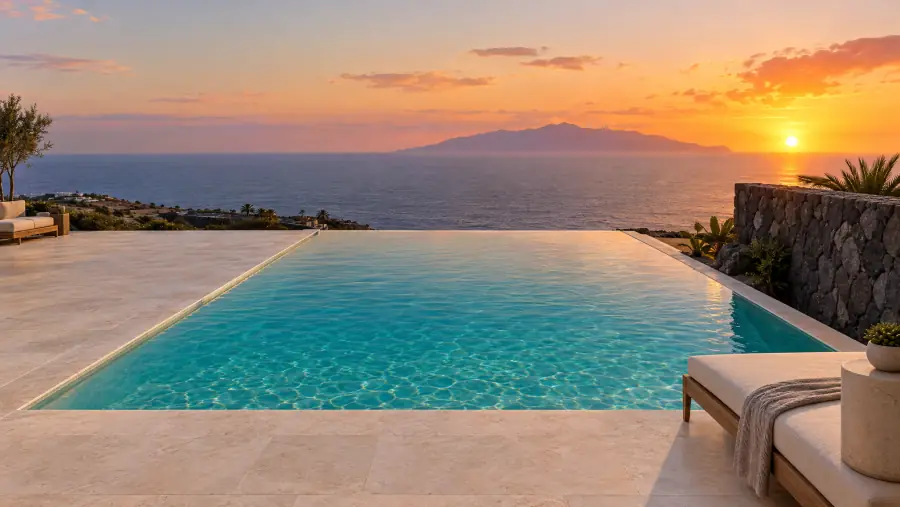
Swimming pool construction and renovation
Building or renovating a pool in Tenerife: construction, filtration, water treatment and the watertightness details that decide if it gives you trouble.
View the service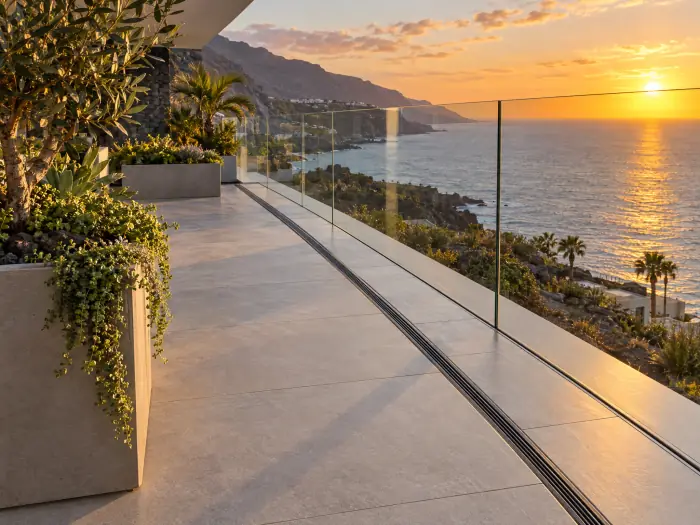
Tell us what you need
We call you within 24 working hours, in English, to arrange the visit. Free and with no commitment.
- Free site visit anywhere on the island
- Fixed-price quote, itemised line by line
- Your details are not passed on to third parties
Prefer to talk? +34 822 263 441
Shall we put a price on your renovation?
Tell us what you want to do and where on the island. We call you, visit the property and send you a fixed-price quote, itemised line by line. No cost and no commitment.