Renovations in Puerto de la Cruz
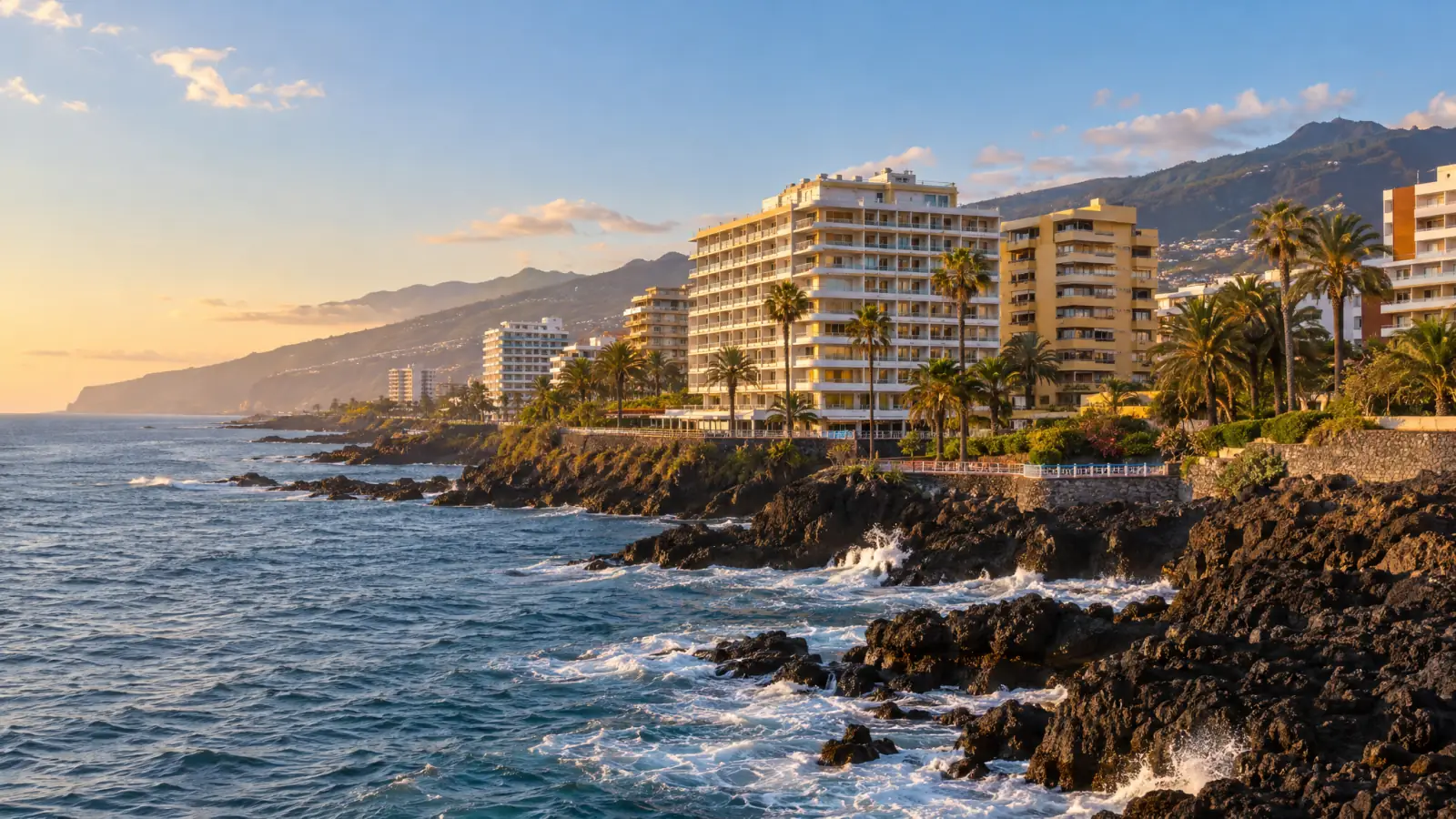
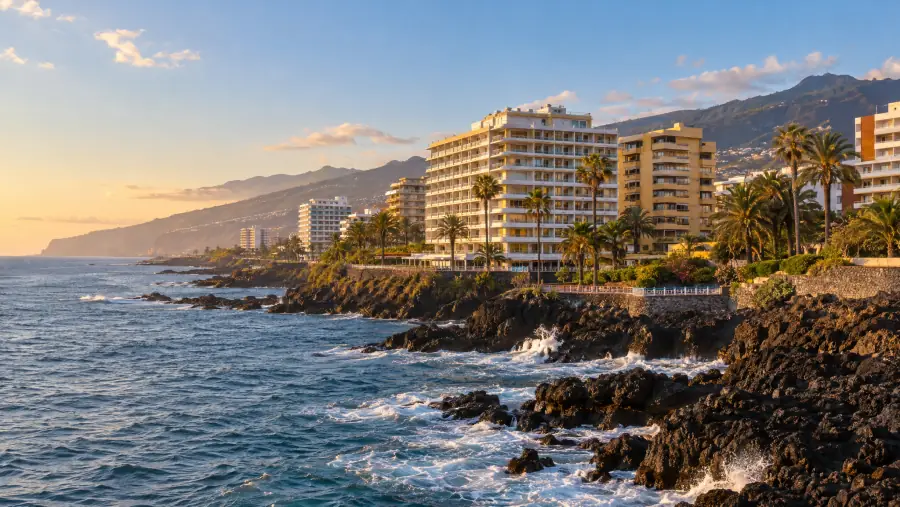
Puerto de la Cruz was Tenerife’s first tourist destination and much of the town went up in one go, between the sixties and seventies: apartment blocks and mixed-use buildings that are now half a century old and right in the middle of their refurbishment phase. It’s also one of the smallest and densest municipalities on the island, so on top of the age of the buildings there’s hardly ever room in the street to set up a job comfortably.
Most requested renovation services in Puerto de la Cruz
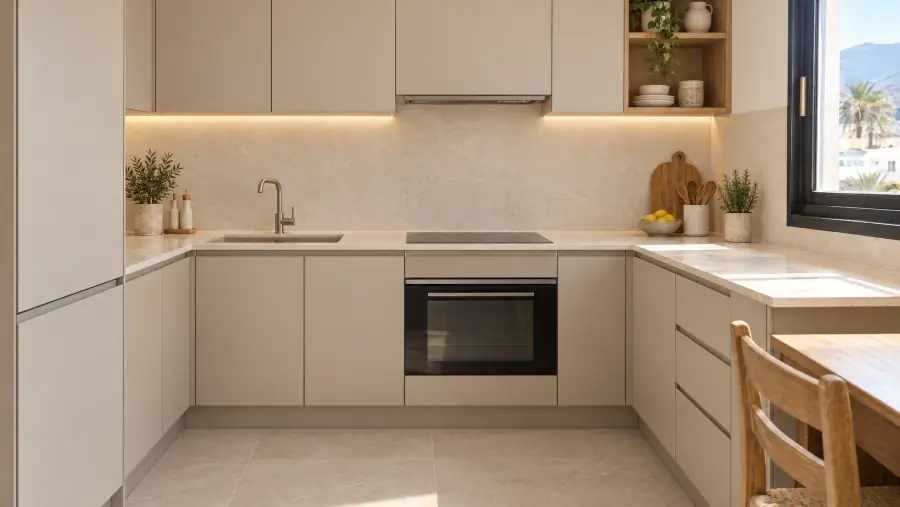
How renovations are done in Puerto de la Cruz
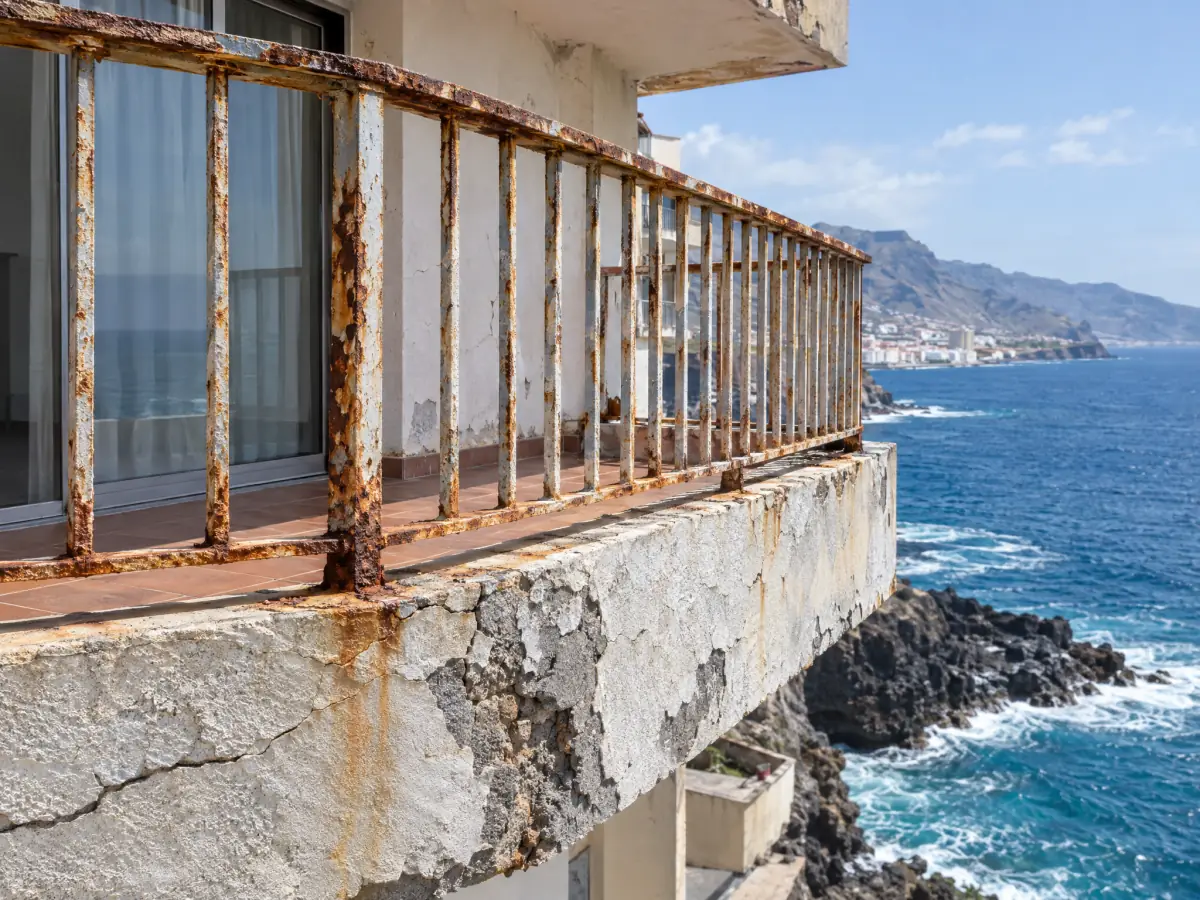
The seventies building that’s due for refurbishment
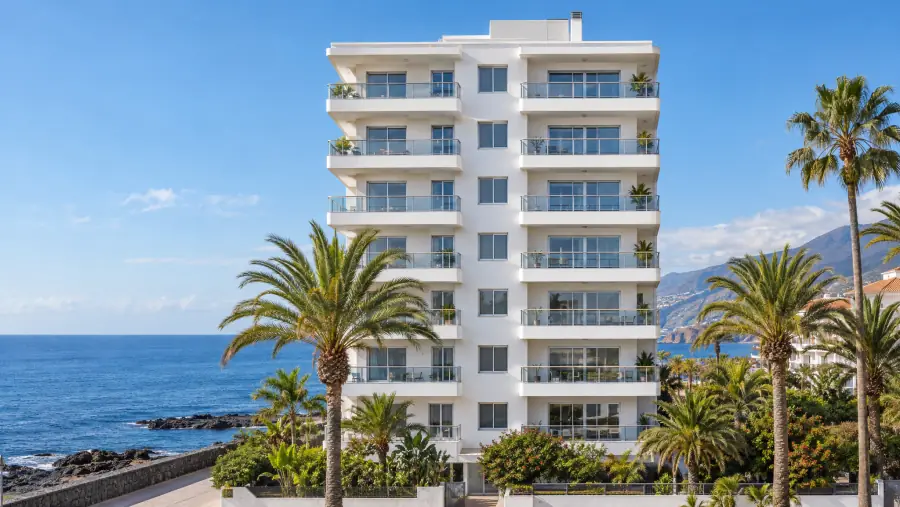
The dominant problem in Puerto has a name: corrosion of concrete reinforcement in a marine environment. Half a century of chloride-laden breeze and high humidity means the concrete loses its ability to protect the steel, and when the steel rusts it expands and bursts the cover from the inside. It always shows up in the same places (slab edges, balcony fronts and floors, overhangs, railing fixings) and advances silently until material starts falling into the street.
The repair isn’t paint. It means breaking out until the sound reinforcement is exposed, cleaning the steel and passivating it, rebuilding the section with specialist repair mortars and then applying a protective coating that holds back water and chlorides without stopping the surface from breathing. It’s skilled work, done by specialist island firms that we hire and coordinate, and what decides the result is the repair phase, not the final colour. A well-repaired but poorly protected facade fails again; a poorly repaired but well-painted one fails sooner.
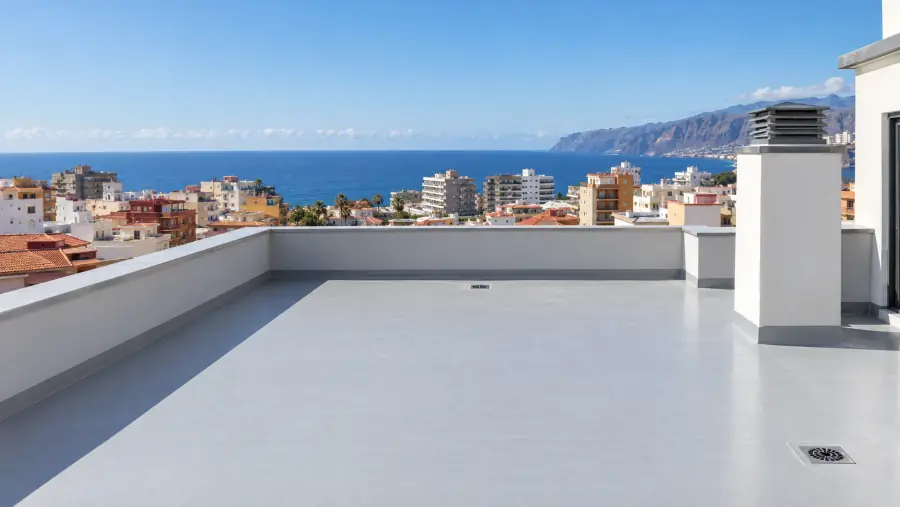
The roof usually needs doing at the same time. The flat roofs of this period have reached today with the waterproofing exhausted and too many layers of earlier patches. When the facade is being worked on, it’s worth making use of the scaffolding to sort out the roof, copings and downpipes too, because putting access equipment up again in a few years costs almost as much as the repair itself.
Communities of owners: the work before the works
In Puerto, a large share of owners don’t live in the building and many live off the island or outside Spain. That makes the preliminary phase (calling the meeting, informing, agreeing and financing) the longest in the process, much longer than the works. Our experience is that the refurbishments that go well are the ones that reach the owners’ meeting with the information already digested: what’s wrong with the building, what happens if nothing is done, what minimum scope is essential and what’s an improvement, and how it can be phased if the financial agreement doesn’t come all at once.
We work with the property administrator (administrador de fincas) and prepare that documentation, including the technical report that explains the work to people who aren’t from the trade. We also help put the building’s paperwork in order: buildings over a certain age must pass the building assessment report (informe de evaluación del edificio), and that report is usually the honest starting point for any conversation about special levies (derramas). There are also public programmes supporting refurbishment; we won’t quote amounts or deadlines because they change from one call for applications to the next, but we will tell you whether your case fits and what paperwork it would require.
Northern damp, salt air and a town with no room for scaffolding
Puerto combines two kinds of attack that in other municipalities come separately: the constant humidity of the north side and the salt of being literally on the sea at Punta Brava, Martiánez or around the harbour. On north-facing facades, mould and green algae appear because they never quite dry out, and inside homes it shows as condensation on cold walls. There, the solutions that work combine airtight windows, proper ventilation and finishes that let water vapour out, plus better insulation when the facade is being worked on anyway.
Logistics is the other serious constraint. The town is compact, with narrow streets, pedestrian stretches and constant pressure on parking; putting up scaffolding means occupying the public highway and, on some streets, working out whether it’s viable or whether the facade is better tackled by rope access, with operatives working from ropes. That decision changes the cost, the timeframe and even the scope of what can be repaired, and it has to be made at the start, not once the equipment has been ordered.
Then there’s the old quarter. La Ranilla, the area around the fishing harbour and Puerto’s historic streets have protected buildings, where the conditions on facade, windows and colour are stricter than in the rest of the town.
Building permits in Puerto de la Cruz
- Prior notification
- Minor works
- Major works with project
Work on the facade, roof and structural elements of a block of flats isn’t minor works (obra menor). It usually needs a technical project, site supervision by an architect or engineer (dirección facultativa), a health and safety study and a council permit, and on top of that there’s the authorisation to occupy the public highway with scaffolding, a platform or a skip, which is applied for at the town hall separately.
Inside the home it’s simpler: renovating a bathroom or kitchen, changing interior installations or floors usually fits the prior notification (comunicación previa) or self-declaration (declaración responsable) route, as long as the structure isn’t touched and the outside appearance isn’t changed. In the parts of the old town with protected buildings that leeway narrows, and it’s worth checking case by case before committing to a finish.
You also have to look at the use. In buildings with tourist or mixed use, of which there are many here, the conditions that apply to the home and the obligations towards the building’s tourist operation can differ from those in a purely residential building. We identify which rules apply and handle the application; what we don’t do is give you fee amounts or decision times in days, because they aren’t figures we can stand behind.
We don’t publish fee amounts or specific administrative timeframes, because they change with each bylaw and an out-of-date figure is worse than none. We check them on the town hall’s online portal (sede electrónica) before giving you a start date. You will find the general framework in the guide to building permits in Tenerife.
Parts of Puerto de la Cruz where we work
We work across the whole municipality: the old town and La Ranilla, the fishing harbour and Plaza del Charco, Martiánez, Las Arenas, La Paz, El Botánico, Punta Brava, San Fernando, El Tejar, Las Dehesas, Mequinez and La Vera. On the seafront, facade and window maintenance sets the pace; further inland, damp and the age of the installations weigh more.
Specific guides for Puerto de la Cruz
Frequently asked questions about renovating in Puerto de la Cruz
The questions we are asked most often on site visits. If yours is not here, ask us directly.
Why are pieces of concrete falling off the balconies?
Because the steel reinforcement has rusted. In a marine environment chlorides penetrate the concrete and the steel loses its protection; as it corrodes it expands and pushes the cover off. It’s a sign the process has been going on for some time. The repair means breaking out back to sound steel, passivating it and rebuilding with specialist mortar, then protecting the facade. Painting over it stops nothing.
Can the facade be refurbished without scaffolding along the whole street?
On many streets in Puerto that’s exactly the key question, because there’s no room. There’s the alternative of rope access work, with operatives working from ropes, which avoids occupying the public highway and usually shortens the set-up. It doesn’t suit every case: if the repair is extensive or a lot of material has to be handled, scaffolding is still the sensible option. It’s decided after seeing the real state of the facade.
Many owners in my community live elsewhere. How do you get a refurbishment off the ground?
With time and clear information. Together with the administrator we prepare the technical and financial documents needed to make the decision: a diagnosis of the building, essential scope versus optional improvements, an itemised quote and the option of splitting the works into phases. Most deadlocks aren’t about money; they happen because nobody has properly explained what happens if nothing is done.
Can I renovate my apartment if the building is in tourist use?
It depends on the building’s situation and whether it’s tied to a tourist operation. As well as whatever council permit applies, you have to allow for the community’s rules and, where relevant, coordination with the operating company on access, hours and dates. We check this before setting a schedule, because that’s where most conflicts arise.
Neighbouring municipalities
We also work in La Orotava and Los Realejos, and in the rest of the north.
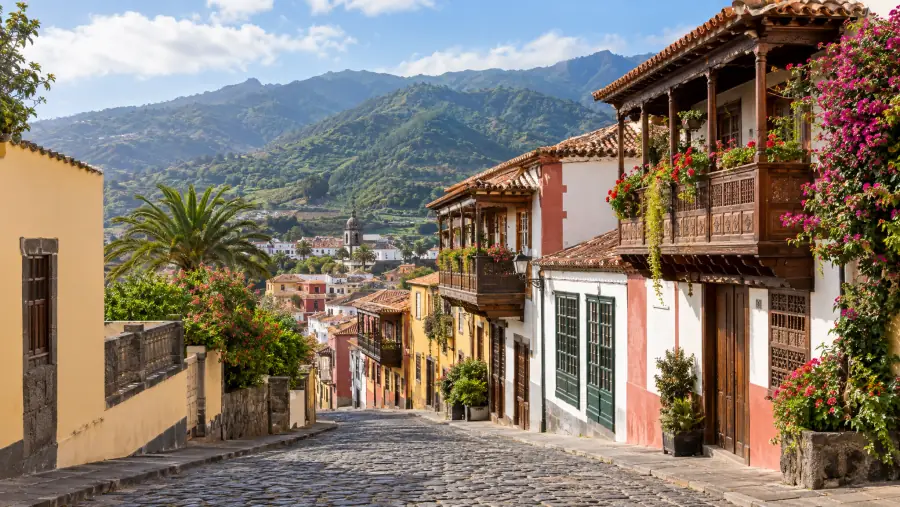
Renovations in La Orotava
View the municipality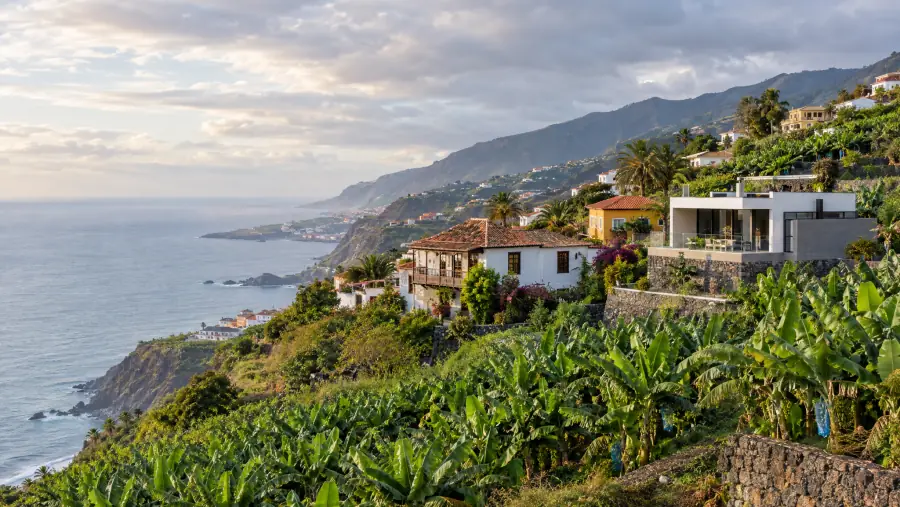
Renovations in Los Realejos
View the municipality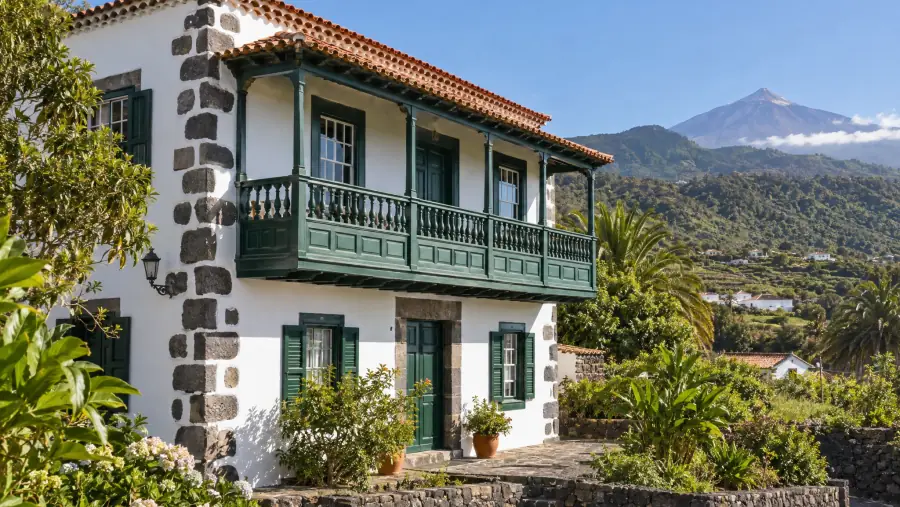
North
All municipalities in the area
View the areaPage last reviewed: 14 August 2026.
See what yours costs in Puerto de la Cruz
Choose what you want to do, the finishes and the style, and the planner gives you the guide price, the timeline and the permit. No details needed.
Plan my renovationStarts with your municipality already selected
Renovating in Puerto de la Cruz?
Tell us what you want to do. Free site visit and a fixed-price quote, itemised line by line.
- Free site visit anywhere on the island
- Fixed-price quote, itemised line by line
- Your details are not passed on to third parties
Prefer to talk? +34 822 263 441
Shall we put a price on your renovation?
Tell us what you want to do and where on the island. We call you, visit the property and send you a fixed-price quote, itemised line by line. No cost and no commitment.