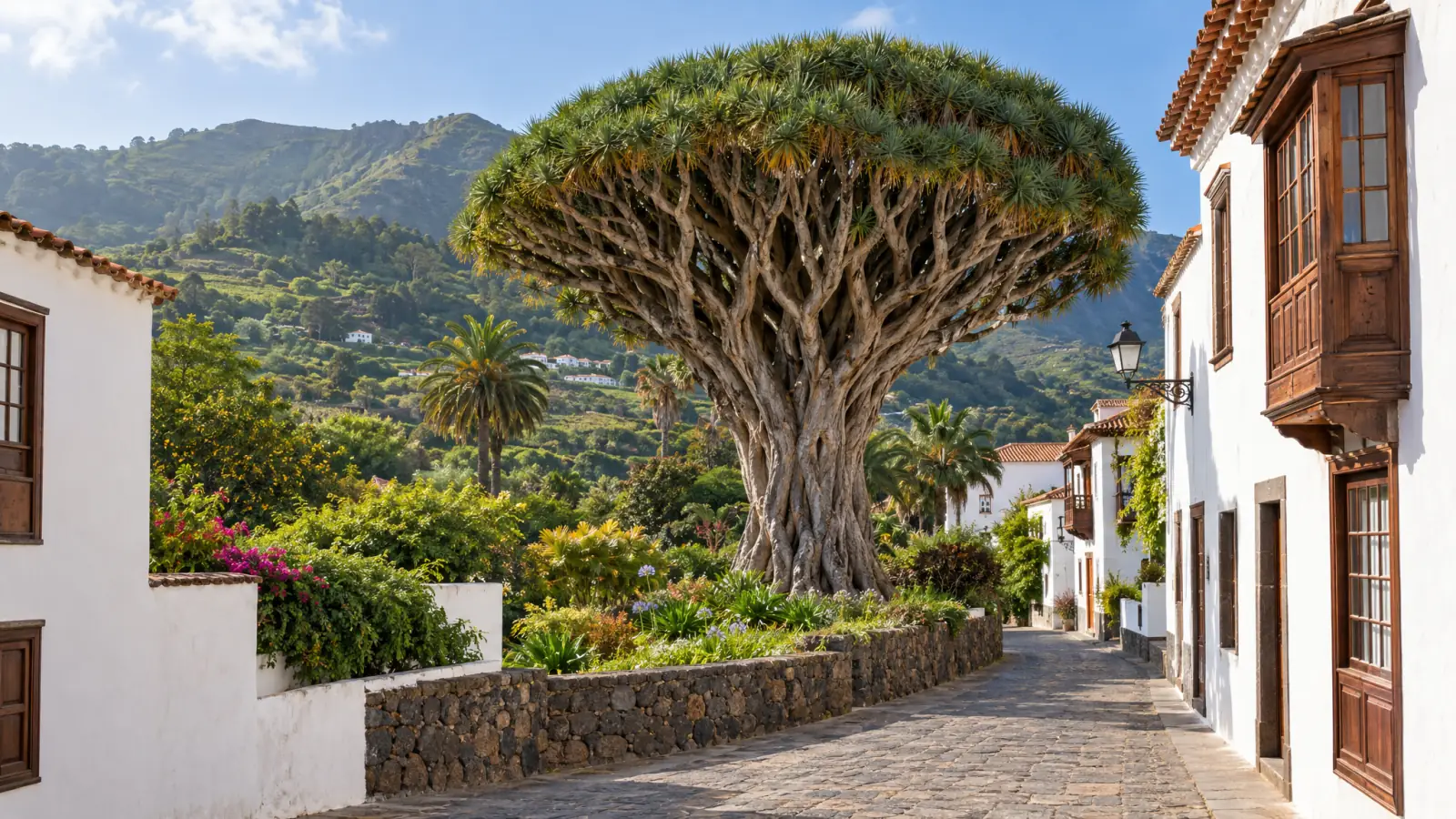
Renovations in Icod de los Vinos
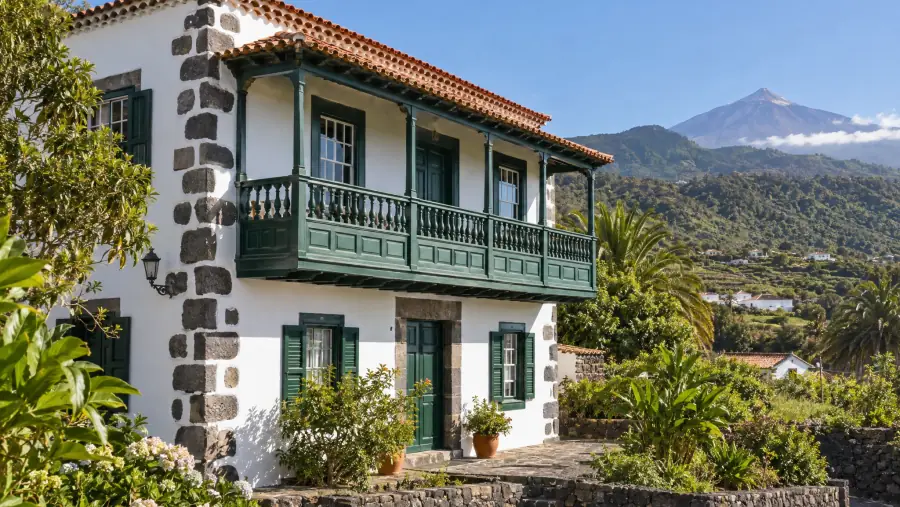
Icod has one of the best-preserved historic centres in the north of Tenerife, with two-storey houses, timber balconies and windows, inner courtyards and tiled roofs on timber structures. Renovating in that old town isn’t renovating with more paperwork: it’s a different kind of job, where what can be changed on the outside is limited and almost all the room for improvement is inside.
Most requested renovation services in Icod de los Vinos
How renovations are done in Icod de los Vinos
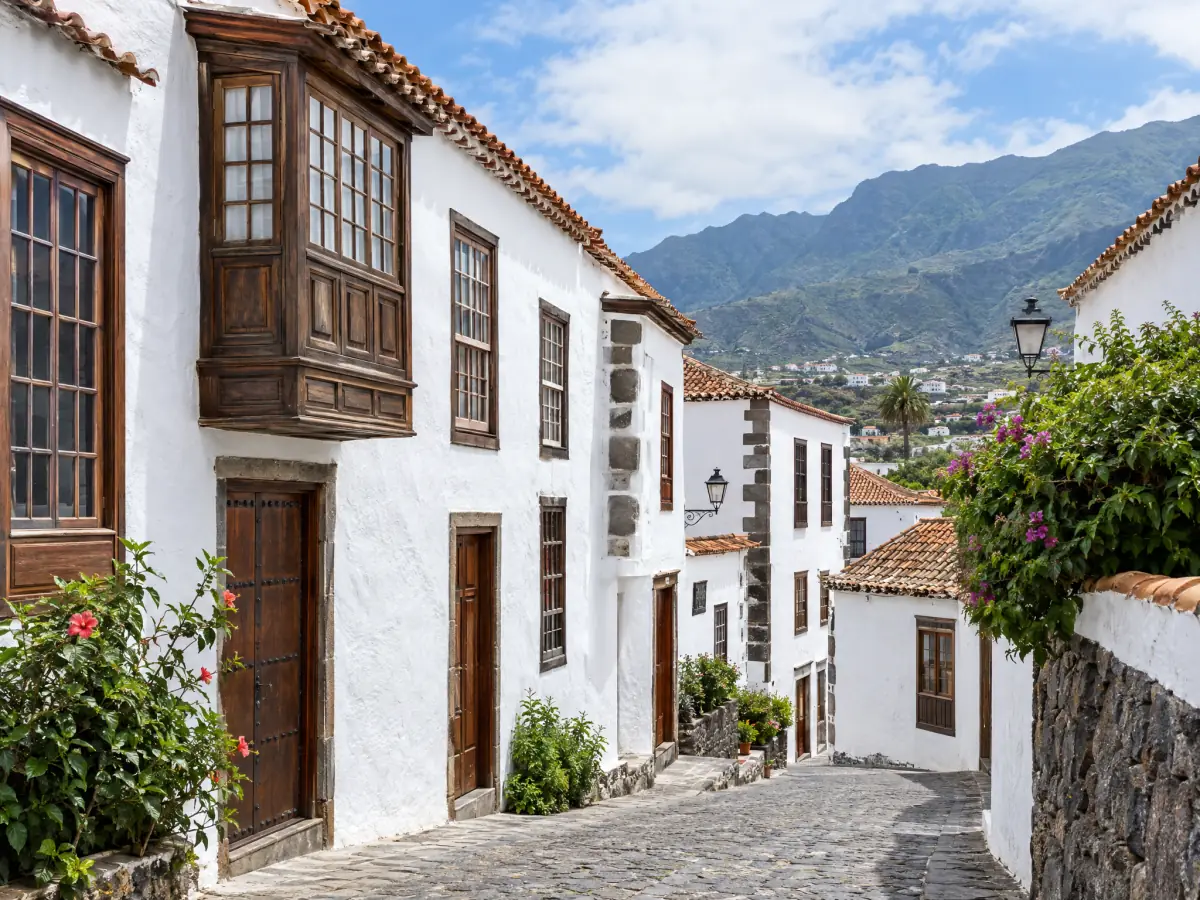
A Canarian house in a protected old town: conserve outside, solve inside
The traditional house in Icod’s old town combines very thick rubble walls, timber floors and roofs, curved clay tiles (teja árabe) and timber windows in openings with a very characteristic arrangement. When the building is within the protected area, the facade, the openings, the materials and the colour are no longer a free choice for the owner and become subject to whatever protection applies to it. That frustrates many people at first, and it’s more manageable than it seems if you accept it early: the renovation is approached by conserving and repairing the outside appearance, and putting the effort on comfort, services and layout into the interior, where there’s usually plenty of room precisely because these houses are large.
The dominant technical problem is damp, and it comes in two ways. From below, rising damp: old walls resting directly on the ground, with no barrier, that soak up water and release it at the bottom of the wall as stains, salts and flaking render. From above, the roof: tiles bedded in mortar that has lost its grip, roof slopes without gutters and a structure in tea (the resinous heartwood of the Canary pine) that, after years of leaks, shows rot or insect attack. Neither is solved by painting. Rising damp calls for work at the foot of the wall and finishes that let it dry instead of sealing it; the roof calls for opening up and looking at the timber before deciding. On top of that comes the insulation challenge: since the exterior can’t be touched, you have to insulate from the inside, which takes a little floor area and means condensation has to be well controlled so as not to create a new problem behind the internal lining.
Narrow streets, steep slopes and suppliers far away
Icod’s old town drops towards the sea quite steeply, and its layout is one of narrow streets, some pedestrianised and many where parking is impossible. For a job that means three very specific things: placing a skip or scaffolding requires a permit to occupy the public highway and often agreed hours; materials come in by small vehicle and the last stretch is done by hand; and a hoist or crane has to be studied beforehand with the real space in front of you, not on a plan. Add to that the distance: the big building suppliers are a long way off, so here a forgotten item isn’t sorted in twenty minutes, it takes half a day. That’s why deliveries of materials are planned further in advance than in the metropolitan area.
Outside the old town the municipality changes quite a bit. In San Marcos, Santa Bárbara, La Vega or the upper neighbourhoods there are more recent detached houses where the job is like that in any other northern municipality, with the humid air as the common factor. Our part is the same in every case: we design, finalise the quote, handle whatever the town hall requires and coordinate the trades from the area who carry out each line item, including the traditional carpentry and masonry trades, which in a protected old town aren’t a luxury but a requirement for the result to fit in.
Building permits in Icod de los Vinos
- Prior notification
- Minor works
- Major works with project
Outside the protected area, the general logic holds: finishes and installations that don’t touch the structure or the exterior usually go through the light route, a prior notification (comunicación previa) or self-declaration (declaración responsable), and anything involving structure, an extension, a change of use or an exterior change is major works (obra mayor) with a project and site supervision by an architect or engineer (dirección facultativa). Within the historic ensemble (conjunto histórico) things change in nature: the protection applying to the building determines which elements must be preserved and which materials and solutions are acceptable, and the work often needs specific technical documents and a favourable heritage report before it can go ahead.
The practical consequence is that in Icod you have to ask before designing, not after. Starting by drawing a new facade or a different roof only to find out later that it isn’t acceptable costs time and money. We check the level of protection of the specific building and what can be proposed, and then we do the project. What you won’t read here is how much the fee is or how many days the application takes: that’s decided by the authorities, not by us, and promising a schedule we don’t control would be exactly the kind of thing we refuse to do.
We don’t publish fee amounts or specific administrative timeframes, because they change with each bylaw and an out-of-date figure is worse than none. We check them on the town hall’s online portal (sede electrónica) before giving you a start date. You will find the general framework in the guide to building permits in Tenerife.
Parts of Icod de los Vinos where we work
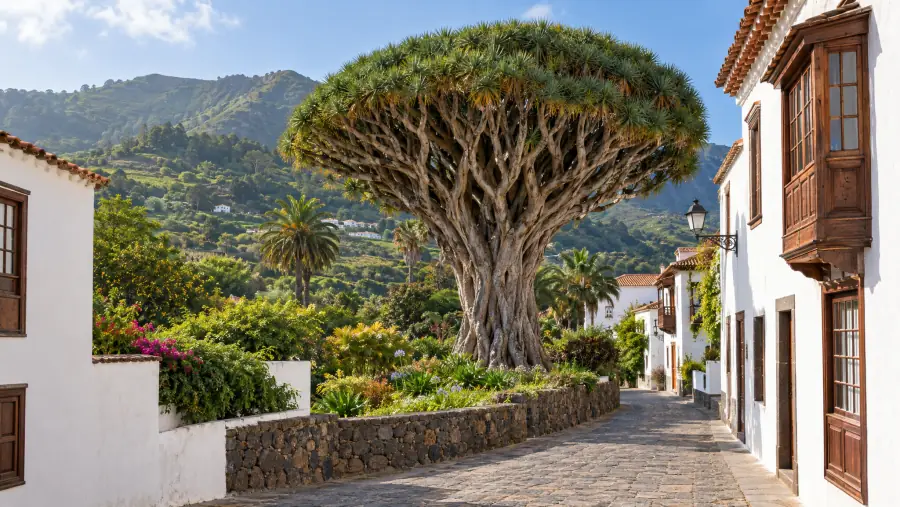
We cover Icod’s historic centre and the area around the Drago dragon tree and Plaza de la Pila, San Marcos, Santa Bárbara, La Vega, Las Cañas, El Amparo, Buen Paso and the midland neighbourhoods, plus the rest of the Isla Baja area. In the old town the job is shaped by protection and access; outside it, by northern damp and distance.
Frequently asked questions about renovating in Icod de los Vinos
The questions we are asked most often on site visits. If yours is not here, ask us directly.
Can I replace the timber windows with aluminium ones in the old town?
Usually not just any way you like. Within the historic ensemble the arrangement of openings, the materials and the colour of the windows are usually subject to the building’s protection, and swapping timber for aluminium casually isn’t accepted in many cases. There are solutions that improve insulation and weathertightness while respecting the outside appearance. We check first and tell you how much leeway you really have before quoting you for windows.
The bottom of my wall is flaking and smells damp. Is it a pipe?
It could be, but in an old house with thick walls resting on the ground, suspect number one is rising damp. You can tell because it affects the lower band of the wall continuously and comes with salts. It’s treated by working at the foot of the wall and with finishes that let the wall dry; sealing it with a waterproof product makes things worse, even if for a few months it seems to work.
If I can’t touch the facade, can I still insulate the house?
Yes, by insulating from the inside. It takes a few centimetres of floor area and means properly dealing with the points where the floor slab or the partitions interrupt the insulation, as well as controlling condensation inside the lining. Done well, it greatly improves comfort in an old-town house; done badly, it creates hidden mould. It’s one of those line items where the difference isn’t in the material, it’s in the construction detail.
Neighbouring municipalities
We also work in Garachico, La Guancha and El Tanque, and in the rest of the north.
Page last reviewed: 14 August 2026.
See what yours costs in Icod de los Vinos
Choose what you want to do, the finishes and the style, and the planner gives you the guide price, the timeline and the permit. No details needed.
Plan my renovationStarts with your municipality already selected
Renovating in Icod de los Vinos?
Tell us what you want to do. Free site visit and a fixed-price quote, itemised line by line.
- Free site visit anywhere on the island
- Fixed-price quote, itemised line by line
- Your details are not passed on to third parties
Prefer to talk? +34 822 263 441
Shall we put a price on your renovation?
Tell us what you want to do and where on the island. We call you, visit the property and send you a fixed-price quote, itemised line by line. No cost and no commitment.